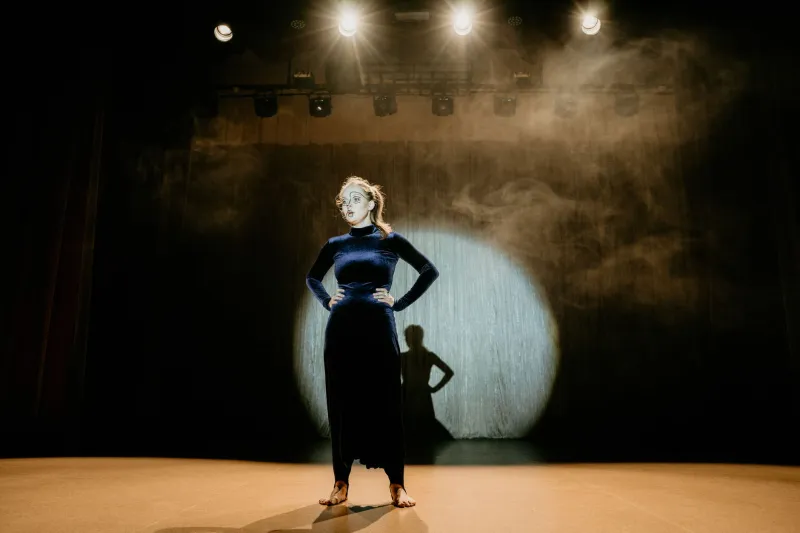
Granny's Got a Shovel: McDonagh's Women and the Critic's Dilemma
The first thing you hear is the voice
Before you see her, you hear her. Mag Folan in The Beauty Queen of Leenane doesn't walk on stage so much as wheeze into it, all passive-aggressive sighs and weaponised cuppas. It's 1996, a London theatre audience is being slowly flayed alive, and Martin McDonagh — twenty-something, cocky, allegedly on benefits in a Camberwell bedsit — has just introduced British theatre to the most terrifying mother since Medea hung up her knitting.
Three decades on, the question hasn't gone away: what exactly is McDonagh doing with his women?
The matriarchs who ate Leenane
Let's be honest about the early plays. The Leenane trilogy runs on a simple, brutal engine: women as obstacles, tormentors, or ghosts. Mag is a monster, but she's a monster made — by loneliness, by a daughter with a resentment account collecting interest since the 1970s. The genius of Beauty Queen is that you can't tell who's the prisoner and who's the gaoler until the very last moment, when McDonagh pulls the rug and the floorboards and most of the house down with it.
Critics at the time — and this being Britain, there were many, armed with theses — split neatly down the middle. One camp saw a young man writing women as either hags or victims, a sort of Catholic guilt x-ray. The other camp saw something trickier: women given the best lines, the biggest laughs, the most devastating final beats. You don't leave the theatre humming the monologue of Pato Dooley, do you?
The sisters on the periphery
Fast forward to The Banshees of Inisherin and something has shifted — or has it? Siobhán (Kerry Condon, robbed of an Oscar, we'll never let it go) is arguably the film's moral centre: the one who reads, the one who leaves, the one who sees the island for the death-trap it is. And yet she exists largely in reaction to the men's idiot feud. She's the escape hatch, not the story.
Same with Three Billboards. Mildred Hayes is the role of Frances McDormand's later career — furious, funny, appallingly human — but watch the film again and count how the script punishes her for her anger while letting the men off with redemption arcs. British reviewers clocked it at the time; the discourse did its usual Twitter turn. McDonagh's defence, essentially, has always been that he writes people, not positions. Which is either a Get Out of Jail Free card or an honest description of how he works, depending on which side of the Odeon you're sitting.
The case for the defence
Here's the uncomfortable bit: McDonagh's women are often the only characters who change. Everyone else cycles — grievances, violence, another cup of tea. But Siobhán gets on the boat. Mildred, for all the wreckage, keeps going. Even Maureen Folan, in that play's cruel final image, has chosen her fate with open eyes. In a body of work obsessed with men who'd rather lose fingers than grow, the women are the ones doing the growing. Or the leaving.
Is that radical? Sort of. It's certainly more interesting than the cartoonish misogyny he's sometimes accused of. McDonagh's women aren't saints or devils; they're the only people in the room doing the accounts.
The case for the prosecution
And yet. Count the plays. Count the films. The centre of gravity is always the men — their feuds, their silences, their beautifully staged acts of self-destruction. The women orbit. For a writer so happy to blow up dramatic convention, he's remarkably conservative about who gets to hold the detonator.
UK theatre has wrestled with this for years, and the argument has moved on from 'is he sexist?' to something more nuanced: McDonagh writes women as witnesses to masculine absurdity, which is both a genuine dramatic function and, let's face it, a bit of a cheat. The best British revivals — and there have been several — tend to lean into that tension rather than smooth it over.
Verdict
So: radical creations or blind spot? The honest answer is both, usually in the same scene. McDonagh gives his women the sharpest tools in the toolbox and then builds the house so they can only renovate the kitchen. That's a frustration and a fascination, and it's exactly why the argument will still be running when the next film arrives.
Mag Folan would probably say we're all talking too much. She'd make us a cup of tea anyway. We'd check it first.