The Biscuit Tin of Damocles: A Field Guide to the McDonagh Kitchen Table
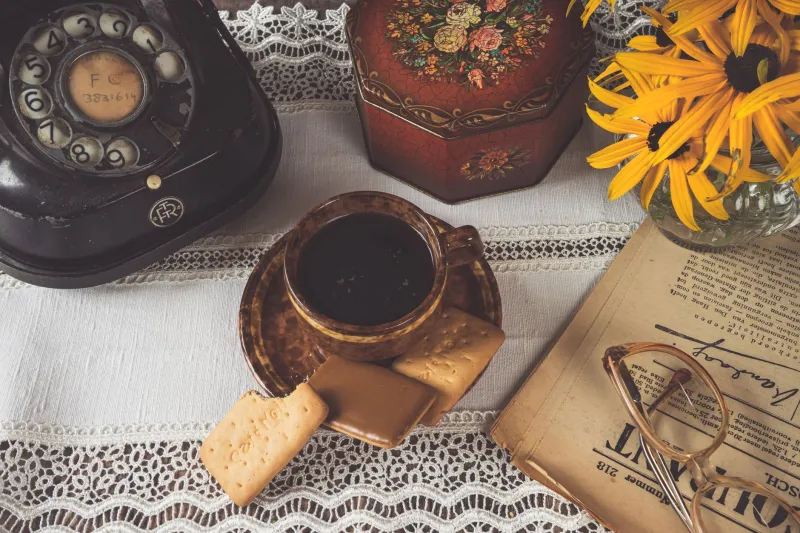
Nobody in a Martin McDonagh play ever simply eats. They negotiate. They withhold. They make an offer of a biscuit and then spend twenty minutes explaining why you don't deserve it. His kitchens are not places of nourishment so much as small, badly ventilated courtrooms where the sentence is passed in custard creams and the appeal is heard over a pot of stewed tea.
For a writer so associated with violence, McDonagh spends a startling amount of stage time on the shopping. And the more you look, the more you notice that the food is never furniture. It is the fastest way he has of telling you who has the power, who is owed something, and who is about to be told to get their own bloody dinner.
The Complan Doctrine
Start in the cottage kitchen of The Beauty Queen of Leenane, which is arguably the most contested piece of domestic territory in modern Irish theatre. Mag and Maureen do battle over a bowl of Complan and a packet of Kimberley biscuits, and the genius of it is how petty it all looks from the outside and how enormous it feels from the inside.
Complan, for the uninitiated, is the meal-replacement powder you buy in a chemist when eating has become a chore. Serving it is an act of care. Serving it every day, slightly late, with a sigh is an act of war. The Kimberley biscuits go the other way: they are a small luxury, a treat with a bit of marshmallow about them, and every one of them that Mag eats is a tiny withdrawal from the account Maureen believes she is owed. It is passive aggression rendered edible. No raised voices required. Just a wrapper, folded, and a look.
Tea Is Not a Drink, It's a Summons
McDonagh's characters make tea the way other people start a fight: deliberately, and with the kettle as a warm-up act. "Will you have a cup?" is rarely a question about hydration. It is a procedural move. Accept and you are a guest, bound by guest rules. Refuse and you have insulted the house, the host, and quite possibly the memory of somebody's mother.
The genius of the tea ritual is that it buys the writer silence. The kettle boils. The cups are found. The milk is discussed. And in that gap, everyone in the audience is quietly calculating who is about to say the unforgivable thing. McDonagh is one of the great writers of the pause, and half his pauses are just a man waiting for the tea to draw.
The Crisp Packet as Greek Chorus
Then there are the crisps, which in McDonagh's hands are less a snack than a percussion instrument. In the pubs and front rooms of his work, a bag of crisps is the sound of somebody who has decided not to speak. It rustles. It crinkles. It fills the air where a sentence should be.
In The Lonesome West the crisp packet is practically a member of the cast, sitting between two brothers who cannot say a tender word without immediately reaching for an insult. In Hangmen, the pub is the whole world, and pub snacks are its class system: the dry roasted peanuts for the men who have been there since opening, the pork scratchings for the ones who want you to know they are not afraid of a bit of gristle.
It is a very British-Irish way of communicating. We do not say "I am furious with you." We say "there's a bag of Tayto in the cupboard, help yourself," in a tone that makes clear the cupboard is locked.
Hospitality, Withheld
The flip side of all this generosity is the refusal. A McDonagh character who does not offer you a biscuit is telling you something far more efficiently than any speech could. Hospitality is the default setting; withdrawing it is the insult.
Watch for the moment when someone is in a kitchen and is not offered anything. Not a cup, not a slice, not a "sit down there and take the weight off." The silence is the point. In a culture where feeding someone is practically a legal obligation, being left unfed in a room full of food is a form of excommunication. It is also, in McDonagh's hands, very funny, in the way that watching a man slowly realise he is not welcome is funny.
The Chips That Never Arrive
And then there is the great McDonagh tradition of the off-stage meal. Characters talk about chips the way other dramatists talk about God: constantly, and without any expectation of a direct answer. The takeaway is ordered. The chipper is mentioned. Somebody's tea is going cold in a bag somewhere off left. It never arrives.
This is not laziness. It is a joke about anticipation. We are promised a bag of chips and we get a monologue instead, and the monologue is better, and that is the whole trick. The chips are the plot we thought we were getting. The crisis is what we actually get. And at the end of it, somebody still has to put the oven on.
Small Change, Big Currency
In The Cripple of Inishmaan, the sweets are a currency in every sense: bribery, affection, apology and pity, all wrapped in cellophane. When food is scarce, or when a character is treated as though they do not get nice things, a single sweet becomes enormous. McDonagh is superb at this arithmetic. He knows exactly how much a boiled sweet is worth to somebody who has been given very little else.
The Last Bite
The great joke of McDonagh's food is that it is almost never enjoyed. It is discussed, hoarded, withheld, offered and refused. Somebody is always about to eat and then something terrible happens. Which, if you have ever had a family row over a Sunday roast, will feel less like theatrical invention and more like documentary.
So watch the kitchens on your next rewatch or revival. Note who pours, who serves, who sits, and who is left standing with an empty cup. That is the plot. The murder is just the bit that happens between meals.